

The Curve That Shapes Desire
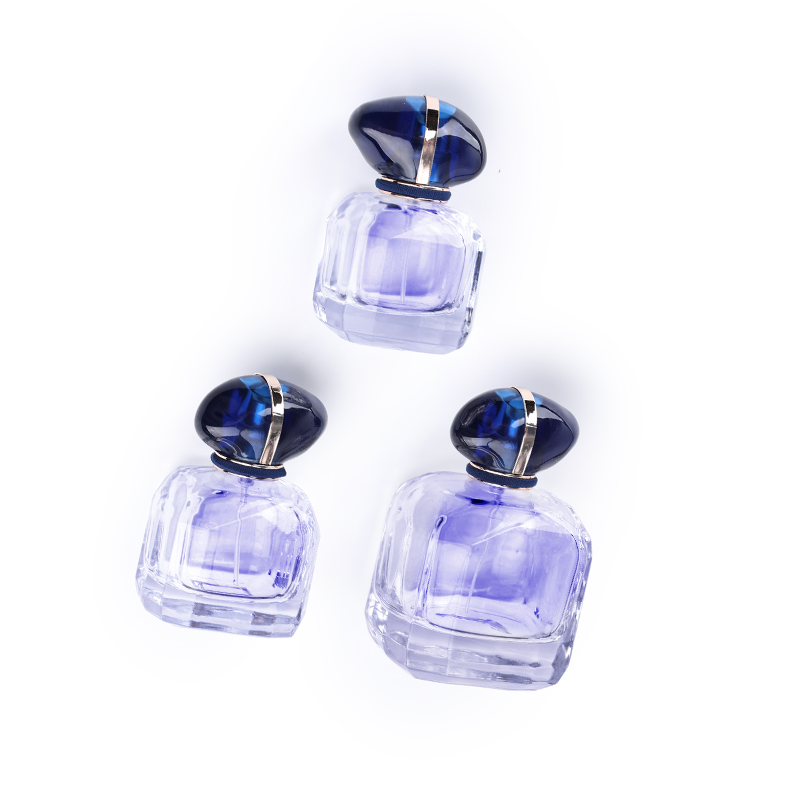
You walk into soft light after a long day, lift a vial, and the world slows. The round perfume bottle rests in your palm like a promise—balanced, bright, and precise. Most people never see the quiet math inside that curve. Yet over 60% of shoppers say they judge a scent first by the vessel, and even a 0.2 mm mismatch can skew the spray or leak (small gaps, big costs). If packaging is both stage and story, what happens when the craft beneath the shine slips? And what do we miss when we chase only the gloss—funny how that works, right?

This is not only a matter of beauty. It is a chain of choices: glass mix, annealing time, atomizer fit, and the soul of the mold. One slip, and the user feels it in the hand, in the mist, in the shelf life. So let us ask: how do we compare suppliers with clarity and care, without getting lost in buzzwords or rushed quotes? Let us move from surface to substance—and see what truly counts. Let us step into the details that decide the experience.
Hidden Gaps When You Pick a Supplier by Price Alone
Where do traditional methods fail?
Many teams still choose on unit cost and a few pretty samples. A better lens is fit, flow, and proof. A reliable round perfume bottle supplier will show process, not just products. Ask about CNC mold tolerances, not only color swatches. Ask to see the annealing curve that prevents stress cracks. Request torque testing data for the closure and atomizer crimping. Look, it’s simpler than you think: when data is clear, risk drops. When it is hidden, the cost returns later—in returns, in scent loss, in silent churn.
Traditional sourcing also hides user pain. A neck that is a hair too tight will bruise pumps. A shoulder that is too round slips in filling lines and delays launch. UV coating that looks rich can still peel if the bake is too short. Without dimensional control and lot traceability, one bad batch can slip through, and no one can find it fast. The flaw is not only in the bottle; it is in the silence between steps. That silence is what you must fix first.
Comparing Futures: Data-Ready Glass and the Next Standard
What’s Next
The near future is not louder; it is clearer. New lines use inline vision systems to read every bottle for ovality, neck roundness, and wall thickness—on the fly. Digital records tag each lot with actual measurements, not averages. That means fewer surprises at filling and more stable spray patterns in hand. Pair this with smarter crimp windows and predictive checks, and you cut rework before it starts. If you are testing a 30ml round perfume bottle, ask how its geometry travels through the line—dry run videos help more than a thousand words. The principle is simple: metrology first, makeup second. And the user feels the difference—subtle, steady, faithful.
There is also a greener edge, measured not by claims but by counts. Higher cullet ratios reduce energy; tighter thermal profiles lower defects; smarter packaging lowers breakage miles downstream—funny how savings show up twice. Compare suppliers by actions you can verify: stable annealing windows, cleaner coatings, safer inks. Then mark what lasted longer in your real use. To choose well, anchor on three checks: 1) dimensional control you can trace (neck ID, thread, shoulder), 2) function data across batches (spray rate and leak tests under torque), 3) process visibility end to end (from mold change logs to pack-out QC). In short, judge not only the shine, but the lineage of the shine. That is how you turn a fragile curve into a steady promise—one bottle, one season, one brand story. NAVI Packaging