
Introduction
I once watched a tech-savvy friend try to “smart-up” a cluttered laser bench with gadgets and dashboards — and the operator still complained about a scratchy throat by noon. In fact, when a laser marking fume extractor sits on the shelf but airflow, ductwork, and filter matching are ignored, the fumes win (true story). Recent field checks show many small shops—about 6 out of 10—either undersize their extraction or skip maintenance, and I keep asking: why do we accept that? The scene is oddly familiar: solder smoke smelled worse than the coffee, and the data didn’t lie. So what actually makes a fume system useful versus just flashy? Let’s dig into the mess and find practical fixes — I’ll be frank and a little snarky. Next up: where the usual fixes break down and what shops secretly hate about them.
Where Traditional Solutions Fall Short
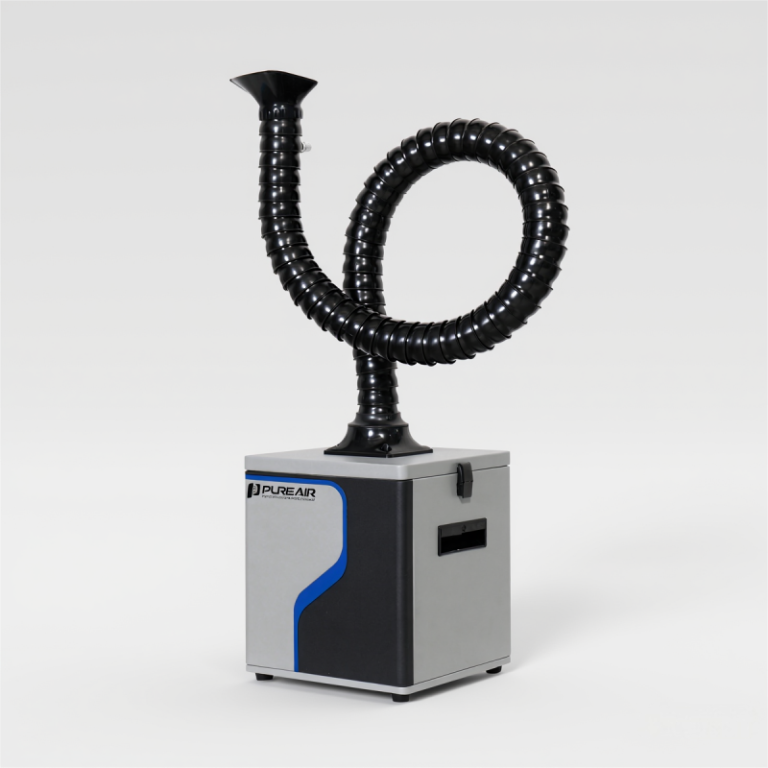
industrial air purifier for dust sounds like the obvious plug-and-play answer, but I’ve seen these units applied like band-aids on a compound fracture. Technically, they filter particulates (HEPA filters, activated carbon) but fail to address fume capture at source. Poorly placed extraction hoods, mismatched fan speed control, and undersized ductwork let smoke bypass the system. You can install a capable unit and still not get capture efficiency where it counts. Look, it’s simpler than you think: if the hood’s wrong, the rest is just wasted energy—and money.
Why do they miss the mark?
First, real workplaces have variables: varying part sizes, laser power changes, and irregular cycles. Power converters and inline fans behave differently under load, so static settings often underperform. Second, maintenance gets ignored. A clogged pre-filter or saturated activated carbon means the purifier can’t do its job; users notice smell before they notice the math. Third, human factors—operators move parts, block hoods, or tweak settings without logging effects. I’ve seen alarms silenced rather than investigated — funny how that works, right? In short: traditional fixes focus on filtration but not on capture strategy, ergonomics, and operational reality.
Future Outlook: Practical Tech and How to Choose Better
Looking ahead, I expect smarter—but practical—approaches to win. Instead of overcomplicated automation, we’ll see simple sensors paired with adaptive extraction that responds to real-time smoke and particulate levels (yes, a touch of edge computing nodes, but modest). When shops marry a well-placed industrial air purifier for dust with adjustable extraction hoods and basic flow monitoring, results are obvious: clearer air, fewer sick days, and less downtime. I like solutions that are predictable and serviceable—no black boxes. Also, modular designs let teams swap HEPA modules or activated carbon cartridges quickly during shift changes. Short pause — makes life easier for operators, and they notice.
What’s Next?
For practical rollout, start small: pilot one workstation, measure fume capture efficiency, then scale. Case example: I helped a shop replace a generic room purifier with a hooded extraction plus a matched unit and saw measured particulate counts drop by more than half within a week. Operators were happier, maintenance was straightforward, and the ROI looked real. That’s the kind of change I recommend—practical, measurable, not just trendy. I’m convinced steady improvement beats shiny promises every time.
Practical Takeaways and How to Evaluate Options
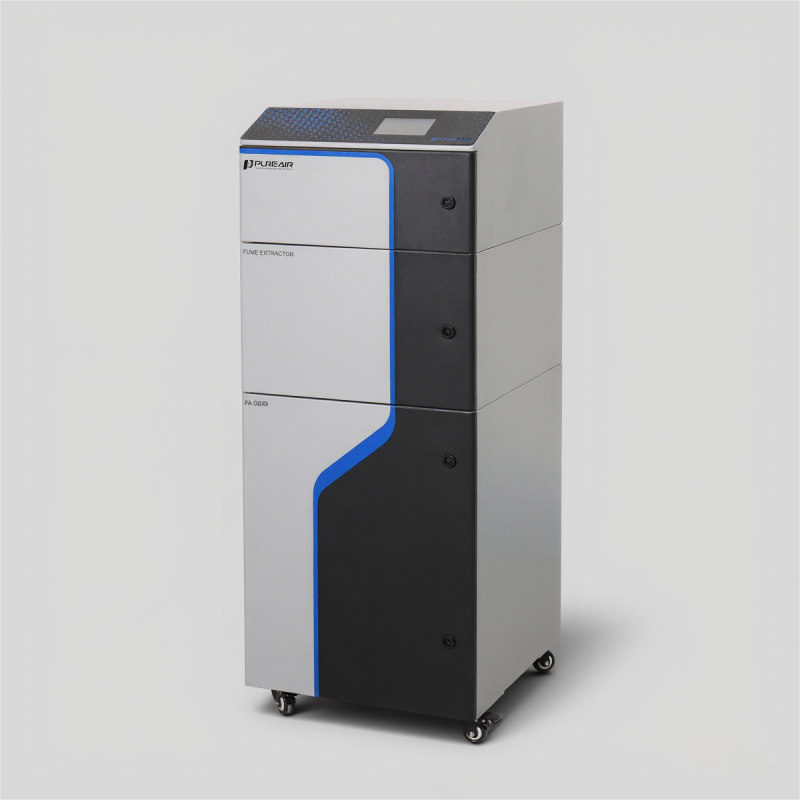
To close, here are three clear metrics I use when choosing systems. First: capture efficiency at the source — measure where the plume forms, not across the room. Second: maintainability — how fast can an operator swap filters or check the fan? Third: adaptability — can the system handle variable laser power, different part shapes, and simple controls? Evaluate units against those points, and you’ll save money and headaches. I’d pick modular filtration, simple flow sensors, and clear service access over a complicated dashboard any day. In my experience, shops that follow these rules breathe easier and run cleaner.
For further practical solutions and reliable equipment, check out PURE-AIR — they make options that prioritize real capture and easy upkeep, which I value as someone who’s spent too many afternoons fixing what should’ve worked out of the box.